Electric Utility · Oil & Gas · Renewables · Nuclear · Water & Wastewater

Your Lineman Just Had an Electrical Contact 80 Miles from the Nearest Burn Unit. Your Safety Officer Goes to Voicemail.

Energy and utility workers operate in some of the most remote, most dangerous, and most clinically complex environments of any workforce in America. Arc flash, falls from height, confined space events, and toxic exposures don't wait for Monday morning — and neither does HealthcareLive. Board-certified specialists on the line in under 5 minutes, wherever your crews are working.
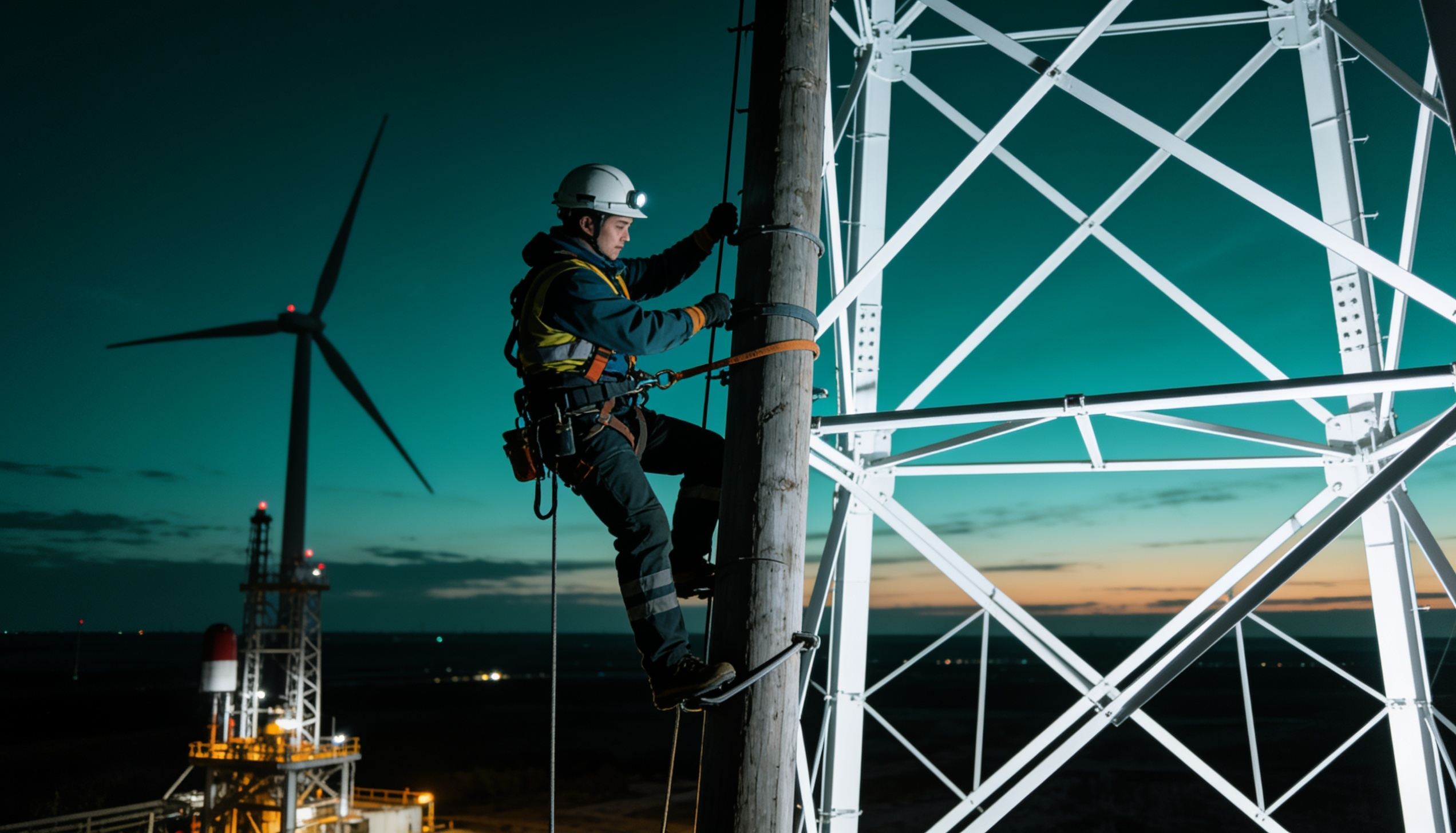
Healthcare worker on night shift
Higher fatality rate in oil & gas than national average
60%+
Of utility field work happens >30 miles from any occ health clinic
$1.5M+
Average medical cost per severe arc flash injury
24/7
Storm restoration crews working with zero occ health coverage
Oil & gas extraction workers have a fatality rate 7x higher than the US national average. Electrical utility workers face the highest electrocution risk of any profession. Yet most energy employers have no occupational health coverage that reaches remote field crews after hours — when most of the serious incidents happen.
OSHA & BLS Data
Trusted by Employers Across America's Energy & Utilities Sector
Caterpillar
Bobcat
Volvo
Comfort Systems USA
Energizer
Coca-Cola
Unilever
The Problem Energy Employers Face

Your Field Crews Are Working in the Most Dangerous Conditions of Any Industry — With No Occupational Health Coverage That Reaches Them.

When a lineman takes an electrical contact on a rural pole 80 miles from the nearest hospital, the dispatcher on the radio doesn't know whether to call 911 immediately or manage in place. When a wind turbine technician takes a fall during a storm restoration, the crew supervisor has no clinician to call for guidance on whether to move the worker or wait for EMS. When a drilling crew member gets a chemical splash at 3am on a remote pad site, there's no occupational medicine physician available to evaluate the exposure and determine whether emergency transport is required.

These aren't edge cases. They're the daily reality of energy and utility field work — where the most serious, most time-sensitive occupational health events happen at the most remote locations, at the worst possible hours, with the least clinical support available. The traditional occupational health infrastructure — a clinic in town that opens at 8am — was never built for how energy and utility workers actually work.

HealthcareLive closes that gap completely. One number, any device, anywhere with cell signal. A board-certified physician on the line in under five minutes who understands arc flash sequelae, electrical injury triage, fall-from-height protocols, and confined space post-rescue evaluation — guiding your field supervisor through the critical decision-making process before EMS arrives.

⚡ The Core Gap
"The most dangerous job sites in American energy are also the furthest from any clinic. The workers who most need immediate occupational medicine access are the ones with no occupational medicine available at the moment they need it most."
$1.5M+
Average medical cost per severe arc flash injury
Arc flash events cause third-degree burns over large body surface areas, requiring burn ICU care, multiple surgeries, and months of recovery. Immediate physician guidance on severity assessment and transport decisions is critical to outcomes.
💀
Oil & gas fatality rate vs. national average
Extraction workers face the highest occupational fatality rate of any major US industry. Many fatalities involve incidents where immediate clinical guidance could have changed the outcome of the first minutes after the event.
📍
60%+
Field work farther than 30 miles from occ health
Transmission line work, pipeline maintenance, oil field pad sites, and wind farm turbine maintenance routinely occur in locations where the nearest occupational health clinic is 30 to 90+ miles away. That's a 2-hour round trip for a worker with a serious injury.
⛈️
24/7
Storm restoration — no occ health coverage at all
After major weather events, utility restoration crews work 16-18 hour shifts in hazardous conditions. Every injury during a restoration event happens during the period when occupational health departments are closed and coverage gaps are greatest.
💸
$42,000
Average workers' comp claim in energy & utilities
Energy and utility WC claims are among the most expensive in any industry because the injuries are more severe, recovery is longer, and remote location delays extend claim duration significantly. Immediate triage changes the trajectory of every claim.
Six Injury Categories That Define Energy & Utility Worker Risk

From Arc Flash to Confined Space — Every Risk Type Your Workforce Faces, Covered 24/7.

Energy and utility workers face a uniquely severe and uniquely remote injury profile. Every category below requires specialized occupational medicine expertise — not a general urgent care provider who's never evaluated an electrical contact injury.

Most Severe Injury Type
Arc Flash & Electrical Contact Injuries
Arc flash events release explosive thermal energy measured in calories per square centimeter — a 40 cal/cm² arc flash incident is the equivalent of a stick of dynamite at 2 feet. Third-degree burns over 20-40% of body surface area, ruptured eardrums, and blast injuries require immediate severity assessment to determine transport requirements, burn center destination, and on-scene stabilization priorities. Electrical contact injuries carry additional cardiac arrhythmia risk for 24-72 hours post-event — a risk that requires cardiological monitoring guidance no field supervisor is equipped to provide alone.
HealthcareLive Response
Emergency physician on line in <5 min → Burn severity assessment → Transport destination guidance → Cardiac monitoring protocol → On-scene stabilization direction → OSHA 300 documentation initiated
🧗
OSHA Fatal Four
Falls from Height
Linemen on utility poles, wind turbine technicians ascending 300-foot towers, substation workers on elevated equipment, and solar installers on commercial rooftops face the highest fall risk of any outdoor workforce category. Fall from height injuries require immediate spinal precautions, neurological assessment, and transport decisions that a field supervisor cannot make without clinical guidance. The critical question — move the patient or stabilize in place — can change the difference between a paraplegia and a full recovery.
HealthcareLive Response
Trauma physician guidance → Spinal precaution protocol → Neurological assessment guide → Transport decision support → EMS handoff coordination → Documentation
🕳️
Highest Rescue Complexity
Confined Space Events & Post-Rescue Care
Utility workers enter confined spaces daily — manholes, vaults, underground chambers, tanks, and pipeline segments — where oxygen deficiency, toxic gas accumulation, and entrapment create some of the most complex and most fatal occupational events in any industry. Confined space rescues often involve hypoxic injury, toxic inhalation, and physical trauma simultaneously — a combination that requires immediate multi-system assessment that goes far beyond what a general urgent care provider can evaluate. Post-rescue monitoring requirements and return-to-work clearances are also specialized clinical decisions.
HealthcareLive Response
Emergency medicine physician → Hypoxia assessment → Toxic inhalation protocol → Multi-trauma evaluation guide → Post-rescue monitoring plan → Return-to-entry clearance
☣️
OSHA Regulatory
Chemical & Toxic Exposure
Energy workers face chemical exposure hazards that few other industries match: hydrogen sulfide (H&sub2;S) in oil and gas operations, sulfur hexafluoride (SF6) in electrical switchgear, hydrofluoric acid in refinery operations, NORM (naturally occurring radioactive materials) in pipeline cleaning, and PCBs in older electrical infrastructure. Each of these exposures requires a specific, evidence-based medical response that a general urgent care provider simply doesn't encounter frequently enough to execute correctly. H&sub2;S exposure alone can be lethal within seconds and requires specific antidote decision-making and decontamination protocols.
HealthcareLive Response
Occupational medicine specialist → Exposure-specific protocol → Decontamination guidance → Antidote decision → Baseline health documentation → OSHA exposure record → Follow-up monitoring
🪴
Highest Frequency
Musculoskeletal & Ergonomic Injuries
Beyond the dramatic high-severity events, the highest-frequency injuries in energy and utilities are musculoskeletal — back strains from heavy equipment operation, shoulder injuries from overhead line work, knee injuries from ladder climbing and repetitive motion, and hand and wrist injuries from tool-intensive maintenance. These injuries are often undertreated in remote locations because the worker pushes through rather than driving 60 miles to a clinic. HealthcareLive brings the clinic to the worker — same-shift physician evaluation, modified duty documentation, and physical therapy coordination without the worker leaving the job site.
HealthcareLive Response
Orthopedic triage at point of injury → First aid vs. medical treatment determination → Modified duty plan → Virtual PT coordination → OSHA determination → RTW tracking in employer dashboard
🔥
Seasonal Peak Risk
Heat Illness & Weather-Related Exposure
Linemen working summer restoration events in Texas and Oklahoma, oil field crews on uncovered pad sites in August heat, and solar installers on commercial rooftops can experience heat exhaustion and heat stroke conditions where the difference between field management and immediate transport is a clinical determination that a dispatcher cannot make. Heat stroke — core temperature above 104°F with CNS involvement — is a medical emergency with a mortality rate that increases dramatically with delayed cooling and transport decisions. Cold weather exposure in Northern utility operations creates parallel risks: frostbite assessment, hypothermia staging, and rewarm protocol decisions.
HealthcareLive Response
Emergency physician → Heat stroke vs. exhaustion determination → Field cooling protocol guidance → Transport decision → CNS assessment → Crew acclimatization recommendations
How HealthcareLive Reaches Your Field Crews

One Number. Any Device. Any Location With Cell Signal. Under 5 Minutes to a Board-Certified Physician.

The occupational health infrastructure your field crews need doesn't require a clinic in every rural county where your transmission lines run or your wells are drilled. It requires a platform that reaches them wherever they are, through whatever device they have, with the clinical expertise specific to the hazards they face every shift.

HealthcareLive's platform is purpose-built for the mobile, remote, 24/7 reality of energy and utility work. A bucket truck operator 90 miles from the nearest hospital gets the same board-certified physician response as a plant worker at a suburban industrial site. The platform doesn't care where the worker is. It cares about getting the right clinician on the line in the right time.

Every HealthcareLive physician working with energy and utility employers understands the specific injury profile of the industry — arc flash sequelae, electrical contact cardiac risk, H&sub2;S exposure protocols, fall-from-height spinal precautions, and the confined space rescue medical decision tree. This isn't a general urgent care line. It's occupational medicine with industry-specific expertise.

1
Incident Occurs Anywhere on Your Grid
Lineman, driller, wind tech, or plant operator experiences an injury or exposure event. Supervisor or worker calls HealthcareLive from any device with cell service — phone, tablet, or rig computer.
→ One number. Immediate connection.
2
Energy-Industry Specialist on the Line
Board-certified physician with occupational medicine and emergency medicine expertise joins the call. They understand arc flash, H&sub2;S, confined space, and fall-from-height — not a general triage nurse reading from a script.
→ Under 5 minutes from first call
3
Clinical Guidance & Decision Support
Physician guides the supervisor through assessment: stabilization priorities, transport decisions, antidote administration if applicable, and EMS handoff protocols. The supervisor knows exactly what to do while help is coming.
→ Real-time guidance throughout the event
4
Documentation & Follow-Up Before the Crew Leaves Site
OSHA 301, work-relatedness determination, exposure record, and any required follow-up monitoring protocols are documented and in the employer dashboard before the crew wraps up the incident. No paperwork lag. No Monday morning catch-up.
→ Same-incident documentation
📍 Real Scenarios HealthcareLive Handles for Energy Employers
Lineman — Arc Flash Contact
📍 Rural Transmission Line, 72 miles from ER
3am restoration event. Lineman sustains arc flash contact from energized secondary. Flash burns on forearms, singed eyebrows, disoriented. Crew has no clinical guidance on transport decision.
HL Response
Physician on line in 4 min → Burn assessment → Cardiac monitoring protocol → Burn center destination confirmed → OSHA 301 initiated
🧗
Wind Turbine Tech — Fall Inside Tower
📍 Remote Wind Farm, 55 miles from hospital
Tech slips on interior ladder at 180-foot elevation level. Arrested by harness but swings and impacts tower wall. Back pain, numbness in left leg. Crew doesn't know whether to move her or wait.
HL Response
Trauma physician → Spinal precaution protocol → Do not move directive → EMS coordinated → Neurological monitoring instructions
☣️
Drilling Crew — H&sub2;S Exposure Event
📍 Remote Pad Site, 90 miles from any clinic
H&sub2;S alarm activates during drill-out. Two crew members exposed before evacuation. One unconscious briefly, now responsive. Rig medic off duty. No clinical guidance on antidote or transport.
HL Response
Emergency physician → H&sub2;S protocol activated → Antidote decision → Transport prioritized → Baseline health captured → OSHA record
🔥
Lineman Crew — Heat Stroke Event
📍 Transmission Line, Central Texas, 105°F
Lineman on storm restoration day 3, 14-hour shift. Stops responding coherently, skin hot and dry, confused. Crew doesn't know if this is exhaustion or stroke. Nearest ER is 45 minutes away.
HL Response
Heat stroke confirmed → Immediate cooling protocol → Transport prioritized → CNS monitoring → Crew rotation recommendations to prevent recurrence
HealthcareLive for Energy & Utilities

Every Product Your Field Crews Need. Anywhere They're Working.

From arc flash response to MSK injury triage to DOT compliance — HealthcareLive's integrated platform covers every occupational health need specific to the energy and utility workforce.

🪴
Highest Frequency Injury Category
MSK Injury Triage & Return-to-Work
Board-certified orthopedic physician evaluation for the back strains, shoulder injuries, and repetitive motion disorders that account for the highest frequency of workers' comp claims in energy and utility operations. Same-shift modified duty documentation. Virtual PT coordination. No 60-mile round trip to a clinic.
Remote Injury Care →
📊
Regulatory Compliance
OSHA Documentation & Employer Analytics
Real-time OSHA 300/301 documentation, exposure incident records, and injury frequency trend reporting — automatically generated from physician-completed triage records. Gives EHS Directors and Safety Managers the data to identify risk patterns across field operations before they become fatalities or regulatory findings.
Employer Dashboard →
🏋️
Prevention
Stretch & Flex for Field Crews
Role-specific pre-shift conditioning programs designed to reduce the back strains, shoulder injuries, and repetitive motion claims that account for the majority of WC frequency in energy operations. Clinically designed for linemen, drilling crews, and pipeline workers. 7-10 minute sessions on any device, before the crew mobilizes.
Stretch & Flex →
🔬
Drug & Alcohol Compliance
DOT & Post-Incident Drug Screening
DOT-compliant pre-employment, random, reasonable suspicion, and post-incident drug and alcohol testing for energy and utility employers with DOT-regulated vehicles and operations. SAMHSA-certified, rapid results, digital chain of custody. Integrated with the same platform managing your incident triage and exposure records.
Drug Screening →
❤️
Benefits & Wellness
Employee Benefits for Field Workforces
Comprehensive benefits built for workers in remote and distributed locations — including telehealth primary care, behavioral health, specialty access, and wellness programs that reach your field crews regardless of where they're based. Benefits that don't require a doctor's office nearby to be useful.
Employee Benefits →
Case Study
How a Regional Electric Cooperative Reduced Workers' Comp Costs by 44% and Eliminated After-Hours Coverage Gaps Across 11 Remote Service Districts
A regional electric cooperative serving 340,000 members across 11 rural counties had an occupational health problem that reflected the reality of all utility operations: their field crews were spread across 14,000 square miles of service territory, the nearest occupational health clinic was 35 to 90 miles from most job sites, and their internal safety team was only reachable during business hours. Three serious after-hours incidents in 18 months — two arc flash events and one fall from a transmission structure — had resulted in delayed care, extended workers' comp claims, and a WC experience mod rate climbing toward 1.6.
HealthcareLive deployed across all 11 districts in 21 days. Every crew supervisor received the platform training. Every field vehicle has the contact information. Within the first restoration event post-deployment, the platform handled four separate injury triage calls in a single overnight shift across three separate county service areas.
−44%
Total workers' comp costs, Year 1
21 days
Time from contract to full deployment across all 11 districts
−62%
Lost-time days per incident, post-deployment
0.92
WC mod rate, down from 1.58 at deployment
Before HealthcareLive, when a lineman got hurt in the northern district at 11pm during a winter storm, I'd get a call from a crew chief who didn't know what to do, drive two hours to meet an ER that didn't understand electrical injury, and wake up Monday to a workers' comp claim that was already three days old with no clinical management. Now the physician is on the line before I finish my first cup of coffee. The entire incident is managed before I even know about it in most cases. That's a completely different relationship with risk.
DM
David M.
VP of Operations & Safety, Regional Electric Cooperative
⚡ Electric Utility — 11 Districts, 14,000 sq mi
Every Energy & Utility Sector We Serve

From the Drilling Pad to the Nuclear Plant to the Wind Farm — One Platform for Every Energy Workforce.

The injury profile changes by sector. The coverage gap is universal. And the need for immediate, remote-capable occupational health is the same whether your workers are 300 feet up a wind tower or 300 feet underground in a mine.

Electric Power Transmission & Distribution
Linemen, substation technicians, and transmission crew members operating across wide geographic service territories with 24/7 restoration obligations. The highest combination of remote location, severe injury potential, and after-hours exposure of any utility sector. Storm restoration events create periods of extreme risk with no occupational health coverage.
Arc flashFallsStorm restorationRemote sites
🛢️
Oil & Gas Extraction
Drilling crews, completions crews, and workover operations at upstream pad sites — often in remote locations with 24-hour operations, rotating crews, and limited access to any medical facility. The highest occupational fatality rate of any energy sector, with H&sub2;S exposure, struck-by incidents, and pressure-related injuries as the primary killers.
H&sub2;S exposureStruck-byBlowout responseRemote 24/7
🌀
Wind Energy
Wind turbine technicians ascending towers of 200-300+ feet, performing maintenance and repair in elevated and often weather-exposed conditions. Fall-from-height risk is the defining hazard — and the isolation of wind farm locations means the nearest hospital may be 45-90 minutes away for any serious incident. HealthcareLive guides the critical first minutes of any fall event through expert trauma physician access.
Fall from heightConfined tower spaceRemote locationElectrical
☢️
Nuclear Power Generation
Nuclear plant workers face a unique combination of radiation exposure surveillance, industrial injury risk, and regulatory requirements under 10 CFR 50. Occupational health at nuclear facilities must meet specific regulatory standards and documentation requirements that generalist providers are not equipped to handle. HealthcareLive provides occupational medicine specialists with nuclear industry protocol knowledge.
Radiation surveillance10 CFR complianceOutage worker healthIndustrial injury
🛣️
Pipeline & Midstream Operations
Pipeline inspection, compressor station operations, and pipeline construction crews work in rural corridors where occupational health access may be 60-90 miles in any direction. PHMSA pipeline safety regulations, DOT drug testing requirements, and the physical demands of pipeline construction create a multi-dimensional occupational health challenge that HealthcareLive is built to address comprehensively.
PHMSA complianceChemical exposureRemote pipeline workDOT testing
💧
Water & Wastewater Utilities
Water and wastewater utility workers enter confined spaces — manholes, lift stations, treatment tanks, and underground vaults — more frequently than any other utility workforce. Confined space rescue events are among the most complex and most fatal occupational incidents in any industry. HealthcareLive's emergency medicine team is trained to guide supervisors through confined space post-rescue medical decision-making in real time.
Confined spaceChemical exposureInfectious exposureMSK injury
Talk to Our Energy Team

Your Field Crews Work in the Most Dangerous Conditions in America. Their Occupational Health Coverage Should Match That Reality.

HealthcareLive's energy and utility team works specifically with electric cooperatives, oil and gas operators, wind and solar developers, and pipeline companies to build occupational health coverage programs that actually reach field crews — wherever they're working, whatever shift they're on.

We'll walk you through a remote emergency response demonstration, a field crew coverage gap assessment for your service territory, and a deployment plan that gets 24/7 occupational health coverage live across every district, every pad site, and every turbine field in under 30 days.

Remote emergency response demo tailored to your sector's injury profile
Field crew coverage gap analysis across your service territory or sites
Workers' comp cost reduction modeling based on your current data
OSHA documentation workflow demonstration
Deployment timeline — full coverage live in <30 days for most operations
Get an Energy & Utilities Demo
Tell us about your operations and we'll build the demo around your specific field workforce and coverage gaps.

We respond to every request within one business day. Your information is never shared with third parties.
For Every Energy Employer

Your Field Crews Work in America's Most Dangerous Industry. Their Occupational Health Coverage Should Be the Best, Not an Afterthought.

From the transmission line in rural Oklahoma to the offshore platform in the Gulf to the wind turbine tower in South Dakota — HealthcareLive delivers board-certified occupational health in under 5 minutes, wherever your crews are working, on every shift. Because a 90-mile drive to the nearest clinic was never a clinical protocol.

Trusted by Energy & Utility Employers Across All 50 States · HIPAA Compliant · SOC 2 Type II · 24/7 No On-Call Fees
Scroll to Top