24/7 · No App · Pay Per Patient
Close the chain-of-custody gap between injury management and drug testing.
When screening is handled through separate vendors, documentation breaks down, compliance risks rise, and claims exposure increases. HealthcareLive Drug Screening keeps orders, tracking, and records in one platform. One system. No gap.
SAMHSA-certified labs
DOT 49 CFR Part 40 compliant
MRO services included
Ordered through injury management platform
END-TO-END CHAIN OF CUSTODY
$28K+
Average OSHA civil penalty per willful DOT drug testing violation, separate from workers’ comp liability, litigation costs, and the reputational exposure of a failed chain-of-custody defense in a contested claim
2 Hours
Post-accident window for DOT-required urine specimens. It’s also the point at which most split-vendor programs break down. A delay between the injury report and screen order is often the gap where chain of custody fails
1 System
Injury report, screen order, collection coordination, MRO review, and results documentation, all in the same HealthcareLive platform managing your workers’ comp triage. No handoff. No gap. No missing documentation at the wrong moment
100%
Chain-of-custody documentation completeness target: every screen ordered through HealthcareLive is documented from order through MRO review with a complete audit trail, accessible to your HR and legal teams from the employer dashboard
Trusted by leading orthopedic groups across the country
Atlantic Orthopaedic
Campbell Clinic
EmergeOrtho
Proliance Surgeons
Tulsa Bone & Joint
Slocum Orthopedics
Ortho Cincy
Rebound Orthopedics
The Problem Every Safety Attorney Knows About
Your injury management program and your drug testing vendor are two separate systems. That gap is where your liability lives.
When an employee is injured and you use one platform for injury documentation and a different vendor for post-accident drug screening, you create a handoff moment that has no owner: a window between “injury reported” and “screen ordered” where the clock is ticking, chain-of-custody has not yet been initiated, and any documentation gap can be used against you in a contested workers’ comp claim or regulatory audit. For DOT-regulated employers, that window has a legal name: a missed collection window. And it is one of the most common and most preventable sources of compliance exposure in the industry.
The Documentation Gap: What It Looks Like In Practice
A supervisor reports an injury at 7:14 AM. The safety director is in a meeting. The HR manager calls the drug testing vendor hotline at 7:58 AM. Collection is scheduled for 9:30 AM, 2 hours and 16 minutes after the incident.
For alcohol testing, the DOT window is 2 hours for breath testing and 8 hours for urine, but the 2-hour gap from incident to collection order creates a documentation problem regardless of the regulatory window. In a contested workers’ comp claim, the gap between injury report and screen order is the first thing plaintiff’s counsel examines. If the screen came back negative but the chain of custody has a 44-minute undocumented gap, the defense value of that negative result is significantly diminished.
Without HealthcareLive
- Injury reported to supervisor
- Supervisor finds safety director, and the delay starts
- Safety director calls separate drug testing vendor
- Vendor schedules collection, and employee drives off-site
- Results in a different system from injury report
- Manual documentation linking leaves, gap risk remains
Undocumented gap. Split-system liability.
With HealthcareLive
- Injury reported and HCL platform notified instantly
- Post-accident screen ordered in same platform in minutes
- Collection coordinated and time-stamped in same record
- Chain of custody initiated at order, no handoff gap
- MRO review and results in employer dashboard
- Manual documentation linking leaves, gap risk remains
✓ Zero gap. One system. Defensible documentation.
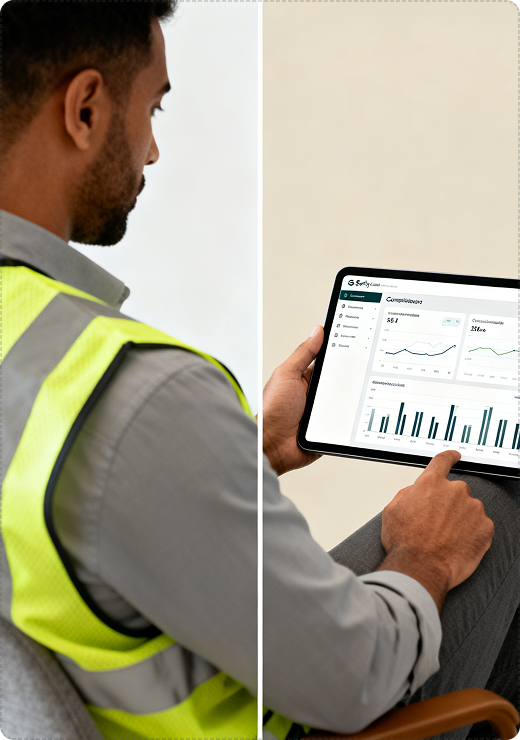
The HealthcareLive Platform Advantage
When the injury report and the screen order live in the same system, the chain of custody begins the moment the incident is documented, not minutes or hours later.
The documentation trail that protects you in a contested claim, a DOT audit, or a regulatory review is complete, integrated, and defensible. Not assembled after the fact from two separate vendor portals.
Complete Coverage
Every type of workplace drug screen
your program requires, ordered and
documented through one platform.
HealthcareLive Drug Screening covers every screen type required for a complete workplace drug and alcohol
testing program, from pre-employment and random pool management to post-accident and DOT-regulated
testing, all ordered through the same platform managing your injury triage and workers’ comp documentation.
Critical · Time-Sensitive
Post-Accident Drug & Alcohol Testing
The most legally sensitive screen type, ordered immediately following a workplace incident before the collection window closes. Ordered from the same HealthcareLive record as the injury report, ensuring the chain-of-custody clock starts the moment the incident is documented.
- Ordered within the same platform managing the injury report, with zero handoff gap.
- Time-stamped against the incident record for complete chain-of-custody documentation.
- DOT 2-hour alcohol and 8-hour urine windows tracked and enforced by the platform.
- Collection site network or on-site collection coordination (where available).
- MRO review and results delivered to employer dashboard and linked to incident record.
- Defensible documentation for workers' comp defense and regulatory review.
Must be ordered immediately. Platform ensures zero delay from injury report to screen order
Required · Conditional Hire
Pre-Employment Screening
Ordered as a condition of hire before an employee starts in a safety-sensitive or regulated role. Managed through the HealthcareLive platform with automated ordering, collection site routing, and results notification, with conditional hire status tracked against screen completion in the employer dashboard. The most legally sensitive screen type, ordered immediately following a workplace incident before the collection window closes. Ordered from the same HealthcareLive record as the injury report, ensuring the chain-of-custody clock starts the moment the incident is documented.
- 5-panel, 10-panel, and expanded panel options based on role and regulatory requirement
- Conditional hire status tracked against screen completion, preventing starts before results
- Collection site network with 20,000+ locations nationally, so employees can select the nearest site
- MRO review included, with positive results reviewed before employer notification
- Results in employer dashboard with hire/do-not-hire guidance based on MRO determination
- DOT pre-employment requirements met for regulated roles (CDL, aviation, pipeline, etc.)
Ordered at conditional offer, with results typically returned in 24–48 hours for negative screens
Mandatory · Ongoing
Random Pool Management
Federally mandated random testing for DOT-regulated employees and standard best-practice for non-regulated safety-sensitive roles. HealthcareLive manages your random pool, maintaining employee rosters, generating compliant random selections, and tracking completion rates against your required annual testing percentages.The most legally sensitive screen type, ordered immediately following a workplace incident before the collection window closes. Ordered from the same HealthcareLive record as the injury report, ensuring the chain-of-custody clock starts the moment the incident is documented.
- Compliant random selection: scientifically random, documented, defensible
- DOT-required annual percentages maintained and tracked (FMCSA: 50% for drugs, 10% for alcohol)
- Employee notification managed through the platform with same-day collection required
- Completion tracking and compliance rate dashboard, so no employee falls through the pool
- Multi-location pool management with centralized compliance across all facilities
- Consortium pool participation available for smaller regulated employers
Ongoing: annual compliance rate targets maintained and reported quarterly
Supervisor-Initiated
Post-Accident Drug & Alcohol Testing
Initiated when a trained supervisor observes specific, articulable behavioral indicators of impairment (slurred speech, impaired coordination, unusual behavior, odor). The observation, documentation, and screen order must all occur within a defensible documented sequence. HealthcareLive provides both the ordering platform and supervisor training to initiate properly.
- DOT-compliant reasonable suspicion supervisor training: online, tracked, documented
- Observation documentation form built into the platform, so supervisor records signs before ordering
- Screen ordered immediately from the documented observation, with chain of custody intact
- Both drug and alcohol testing available, with 2-hour alcohol window tracked by platform
- MRO review and legal-defensible documentation trail from observation through result
Initiated when impairment observed. Supervisor training and platform ordering available 24/7
Return-to-Duty Protocol
Return-to-Duty & Follow-Up Testing
For employees returning to safety-sensitive roles following a positive test or DOT violation, return-to-duty testing and the subsequent follow-up testing program are federally mandated. HealthcareLive manages the full RTD protocol: substance abuse professional (SAP) referral, RTD screen, and the follow-up testing schedule required before and after return.
- Substance Abuse Professional (SAP) referral coordination and evaluation documentation
- Return-to-duty screen ordered and documented with SAP authorization in record
- Follow-up testing schedule managed, with a minimum of 6 tests in first 12 months for DOT employees
- MRO review included, with positive results reviewed before employer notification
- Compliance tracking, with follow-up schedule maintained until SAP releases employee
- All documentation maintained in employer dashboard for regulatory review
Ordered at conditional offer, with results typically returned in 24–48 hours for negative screens
Federal · DOT Regulated
DOT-Regulated Testing Programs
For employers with federally regulated safety-sensitive roles (CDL drivers, aviation, pipeline, transit, railroad, maritime), DOT drug and alcohol testing requirements are specific, exacting, and enforced with significant civil penalties. HealthcareLive manages your DOT testing program under 49 CFR Part 40 and the applicable modal regulations for your industry.
- FMCSA (CDL / trucking): pre-employment, random 50%, post-accident, reasonable suspicion, RTD, follow-up
- FAA (aviation): safety-sensitive employee testing per 14 CFR Part 120
- Pipeline / gas / hazmat: PHMSA requirements per 49 CFR Part 199
- Maritime: USCG requirements per 46 CFR Part 16
- 49 CFR Part 40 procedural compliance: collector training, lab certification, MRO review
- DOT audit documentation: complete program records available for regulatory review
Federal compliance: penalties up to $28,474 per violation for willful violations
Complete Coverage
From screen order to documented result:
every step in one platform.
There is no vendor switch, no new login, and no separate documentation system. The screen is ordered where the injury lives, and
the result is returned to the same record.
Trigger event
documented
Incident reported in the HealthcareLive platform: injury triage, post-accident, or supervisor-initiated reasonable suspicion. Screen type determined at documentation.
T+0 min
Screen ordered in
platform
Post-accident screen ordered from within the injury record in one click. Chain-of-custody clock starts at order, time-stamped against the incident. No vendor handoff.
T+0 min
Collection
coordinated
Employee routed to nearest collection site (20,000+ nationwide) or on-site collection initiated where available. Collection site confirms appointment in platform, and employer sees status in real time.
T+0 min
SAMHSA lab analysis +
MRO review
Specimen delivered to SAMHSA-certified lab. Results reviewed by a licensed Medical Review Officer (MRO) before any positive result is reported to the employer, protecting the employee’s due process and the employer’s legal position.
T+0 min
Trigger event
documented
Final MRO-reviewed result returned to the employer dashboard and linked to the original injury or incident record. Complete audit trail: trigger event → screen order → collection → lab → MRO → result. One record. Defensible end to end.
T+0 min
Platform Integration
The same dashboard your safety director uses for injury triage is where your drug screening program lives.
There is no secondary login, no separate vendor portal, and no manual documentation transfer between systems. Injury report → screen order → collection status → MRO result: every step is in one employer record. Your HR team, safety director, and legal counsel all access the same complete chain-of-custody documentation from the same HealthcareLive dashboard.
One record: injury report + screen + result
The chain-of-custody documentation that protects you starts at injury documentation, not at screen order
Real-time status notifications
Safety director, HR, and legal contacts notified at each stage: collection confirmed, preliminary result, MRO final
Multi-location program management
Random pool, pre-employment, and post-accident screening managed across all locations in one centralized compliance dashboard
Audit-ready documentation, always
Every screen record is maintained with full chain-of-custody documentation, accessible for DOT audits, workers' comp proceedings, and internal review

Compliance Infrastructure
The certifications, processes, and professional
oversight behind every screen.
HealthcareLive Drug Screening is built on a compliance infrastructure designed to withstand regulatory
audit, workers’ comp litigation, and legal discovery, from the SAMHSA-certified lab network to the
licensed MRO review process to DOT-specific procedural requirements.
Federal Compliance
DOT 49 CFR Part 40 Compliant Across Every Modal Administration
If you have employees in federally regulated safety-sensitive roles (CDL drivers, aviation, pipeline, transit, maritime, railroad), your drug and alcohol testing program must comply with 49 CFR Part 40 and the applicable modal administration regulations. HealthcareLive manages your DOT testing program with full procedural compliance, from collector qualifications and custody-and-control forms to MRO review protocols and DOT-specified reporting formats.
FMCSA
Federal Motor Carrier Safety Administration
CDL operators and commercial trucking. Random testing minimums: 50% drug, 10% alcohol.
49 CFR Part 382
Federal Aviation Administration
Aviation safety-sensitive employees under anti-drug and alcohol misuse prevention programs
14 CFR Part 120
Pipeline & Hazardous Materials Safety Administration
49 CFR Part 199
United States Coast Guard
Maritime workers on commercial vessels, crew members in safety-sensitive positions
46 CFR Part 16
Federal Transit Administration
Public transit operators, maintenance, dispatch, where safety-sensitive definitions apply
49 CFR Part 655
Lab Certification
SAMHSA-Certified Laboratory Network
Every specimen collected through HealthcareLive is analyzed at a Substance Abuse and Mental Health Services Administration (SAMHSA)-certified laboratory, the federal certification standard for workplace drug testing accuracy and chain-of-custody integrity.
- SAMHSA/HHS certification required for all DOT-regulated testing and best practice for all workplace testing
- Rigorous split-specimen procedures: donor has the right to have the "B" specimen tested at a separate certified lab
- 5-panel (SAMHSA standard), 10-panel, and expanded panels available
- Point-of-collection test (POCT) rapid options available for non-DOT testing
- Lab QA/QC documentation maintained and available for audit review
Medical Review Officer
Licensed MRO Review, Included on Every Screen
A Medical Review Officer (MRO), a licensed physician trained in DOT drug testing regulations, reviews every non-negative result before it is reported to the employer. This protects the employer from acting on an unreviewed positive and protects the employee’s right to explain a legitimate medical reason for a positive result.
- MRO review included on all screens, with no additional cost for the review step
- Rigorous split-specimen procedures: donor has the right to have the "B" specimen tested at a separate certified lab
- Donor interview process for all non-negative results, protecting employee due process
- MRO can determine "negative" if there is a legitimate medical explanation (e.g., prescribed opioids with valid documentation)
- MRO determination documented in employer record and legally defensible
Chain of Custody
End-to-End Chain of Custody Documentation
Chain of custody in drug testing is not just the physical specimen handling. It is the continuous documented record linking the trigger event, the screen order, the collection, the lab receipt, and the MRO result. HealthcareLive maintains this record in a single employer dashboard from the moment the incident is documented.
- Federal Custody and Control Form (CCF) used for all DOT testing: 5-part form tracked through every handoff
- Electronic chain of custody (eCCF) available for participating collection sites, reducing documentation errors
- Specimen ID tracked from collection through lab receipt through MRO review
- All chain-of-custody documents stored in employer dashboard and accessible for 5 years per DOT requirements
- Complete audit trail available for regulatory review, workers' comp proceedings, and legal discovery
Supervisor Training
DOT Reasonable Suspicion Supervisor Training
DOT regulations require supervisors of regulated employees to receive 60 minutes of drug awareness training and 60 minutes of alcohol awareness training before they can make a reasonable suspicion determination. HealthcareLive delivers this training online through the employer platform, with completion tracked and documented.
- DOT-compliant 60+60 minute reasonable suspicion training: online, self-paced, tracked
- Completion documented in employer dashboard, with training records available for DOT audit
- Covers specific behavioral and physical indicators of impairment: what qualifies vs. what doesn't
- Documentation guidance for the observation record that must precede a reasonable suspicion screen order
- Available for non-DOT employers as best-practice supervisor training
Platform Integration · The Differentiator
What a post-accident screen looks like when it's in the same system as your injury triage vs. when it isn't.
Live scenario · Forklift incident, Manufacturing Facility, 7:14 AM
Protocol Active
Incident reported: forklift operator, lower back, loading dock B
Supervisor opens HealthcareLive incident report on mobile device. Injury documented: mechanism, body zone, initial pain level, witnesses. Timestamp locked.
Injury DocumentedPost-accident screen ordered from the same injury record in 2 clicks
Supervisor selects "Order Post-Accident Screen" from the injury record. Screen type, collection instructions, and nearest collection site pre-populated. Employee receives notification. Chain-of-custody clock starts at T+2 minutes, not T+44 minutes after HR is reached.
Screen Ordered · T+2 minVirtual triage initiated: board-certified specialist in <10 minutes
Injury triage and screen order happen in parallel, not sequentially. The employee is connected to a board-certified specialist for injury assessment while the drug screen protocol is already initiated. No waiting for one before starting the other.
Triage + Screen · ParallelCollection completed: collection site visit confirmed in platform
Employee reaches nearest collection site. Collection site confirms receipt in the HealthcareLive platform. Custody-and-control form initiated. Employer dashboard shows "Collection Complete at T+38 min from incident." Safety director notified.
Chain of Custody · ActiveMRO-reviewed result returned and linked to injury record
Lab result reviewed by MRO. Final determination returned to employer dashboard and linked to the original 7:14 AM injury record. Complete chain: incident → screen order → collection → lab → MRO → result. One record. Full audit trail.
Complete · Defensible RecordThis is the scenario that separates HealthcareLive from every drug testing vendor that operates independently of your injury management platform. A workplace incident at 7:14 AM, and every minute that follows.
Split-Vendor vs. HealthcareLive
The 10 ways a split-vendor drug testing program creates gaps a single platform closes.
| Capability | Split Vendor | HealthcareLive |
|---|---|---|
| Post-accident screen ordered from injury record | Separate platform | Same record |
| Chain of custody starts at injury documentation | Gap at handoff | Zero gap |
| Injury triage + screen ordered in parallel | Sequential, delayed | Simultaneous |
| Drug screen result linked to injury record | Manual link required | Automatic |
| One login for safety director and HR | Multiple portals | Single dashboard |
| Random pool + post-accident + pre-employment in one system | Typically fragmented | All in one |
| DOT compliance tracked against injury record | Manual reconciliation | Automated |
| Multi-location compliance dashboard | Location by location | Centralized |
| MRO review included in program cost | Often additional fee | Included |
| Audit trail covers full injury-to-result chain | Partial (two systems) | Complete (one system) |
Compliance Outcomes
The compliance numbers and platform
performance your Safety Director, HR
team, and legal counsel need to see.
of HealthcareLive employer clients running integrated drug screening
and injury management programs, 2022–2025.
Chain-of-custody documentation completeness target
Every screen ordered through HCL has a complete audit trail from incident documentation through MRO-reviewed result, all in one employer record
<10 Min
Post-accident screen order from injury documentation
Average time from injury report to screen order when both are managed in the same HealthcareLive platform, vs. 30–60+ min with separate vendors
Negative result turnaround time
From specimen collection to MRO-reviewed negative result returned to employer dashboard. SAMHSA-certified lab network standard
Collection sites nationally
Every screen ordered through HCL has a complete audit trail from incident documentation through MRO-reviewed result, all in one employer record
Platform performance data reflects HealthcareLive employer accounts with active integrated drug screening and injury management programs, 2022–2025. DOT compliance rates based on programs with designated employer representative training completed and active random pool management. Chain-of-custody completeness reflects screen orders placed through the HCL platform, not screens ordered through separate vendor integrations.
Every Question, Answered
The objections safety directors, HR teams, and CFOs raise before approving Remote Injury Care.
"We already have a drug testing vendor. Why would we switch?"
If your drug testing vendor is separate from your injury management platform, you have a documentation gap between the injury report and the screen order that represents a compliance and legal liability, regardless of how good the vendor is at testing. The value of integrating drug screening into HealthcareLive is not the quality of the test. It is the elimination of the handoff gap between injury documentation and screen order: the gap where chain-of-custody breaks down, where DOT windows get missed, and where contested claims find their opening. Most employers who evaluate this find their current vendor delivers good tests. They also find their documentation trail has a gap they didn’t know about until it was examined
✓ Integration eliminates the handoff gap, not a test quality argument Chain-of-custody starts at injury documentation · One record, no reconciliation required
"Our existing vendor already has a portal. Isn't that good enough?"
A portal is a separate login, which means a separate record, a separate audit trail, and a manual connection between the injury report and the screen order that someone has to maintain. When plaintiff’s counsel requests your post-accident documentation, “good enough” is the difference between producing a single integrated record and producing two separate documents with a timestamp gap between them. The portal is not the issue. The gap between the portal and your injury management system is the issue, and that gap doesn’t close just because both systems have a web interface.
"We only have a few DOT-regulated employees. Is this overkill?"
DOT compliance obligations don’t scale with the number of regulated employees. They are binary. If you have one CDL driver, you have the same FMCSA documentation and testing requirements as an employer with 400. For smaller regulated employers, the administrative burden of maintaining DOT compliance through a separate system is proportionally higher, not lower, because there’s no dedicated compliance coordinator to manage the reconciliation. HealthcareLive Drug Screening is particularly valuable for employers with smaller regulated workforces because it removes the coordination burden entirely: the compliance tracking, random pool management, and documentation are automated in the same platform your HR team already uses.
"How do we handle employees in remote locations far from a collection site?"
HealthcareLive has a 20,000+ collection site network nationally, the largest independent collection network in the US — meaning most employees can reach a site within 15–30 minutes of any facility location. For genuinely remote operations (maritime, offshore, pipeline, remote construction), mobile collection coordination is available, and the platform manages the collection logistics with the same chain-of-custody documentation regardless of collection method. For DOT-regulated employers with remote operations, the platform also tracks collection site proximity to your facility locations during setup, so you know before a post-accident incident whether your employees can reach a collection site within the DOT time window.
"What happens if an employee tests positive? What's the process?"
HealthcareLive’s MRO review process protects both the employer and the employee when a non-negative result is returned. The MRO contacts the donor before reporting a positive result to the employer, giving the employee the opportunity to provide a legitimate medical explanation (e.g., a valid opioid prescription). If the MRO determines the result is a confirmed positive with no legitimate explanation, the result is reported to the employer dashboard with the MRO determination documentation. For DOT-regulated employees, the Substance Abuse Professional (SAP) referral process is initiated from within the same platform, managing the return-to-duty protocol through completion. For all employees, the employer’s defined consequence policy is applied. HealthcareLive does not make employment decisions.
✓ MRO review before employer notification · SAP referral managed in platform for DOT employees · RTD protocol tracked to completion · Employer makes employment decisions, not HCL
"How long does it take to set up a program and migrate from our current vendor?"
A new HealthcareLive Drug Screening program can be operational for post-accident and pre-employment testing in as little as one week from enrollment, including account setup, collection site network access, and designated employer representative (DER) training. Random pool migration from an existing vendor requires transferring the current employee roster and testing history, typically completed within 2–3 weeks to ensure DOT annual percentage calculations are based on an accurate starting point. Existing testing records from your prior vendor are not transferred into HealthcareLive, so your legal team should retain those records per your DOT retention obligations. Going forward, all records are in the HealthcareLive platform. There is no blackout period for testing during the transition.
The Complete Platform
Drug Screening is the compliance layer.
Every other part of the HealthcareLive
platform connects to it in one record.
Drug Screening connects to the rest of the HealthcareLive platform because injury
incidents and drug testing obligations aren’t separate events. They happen in the same
moment, on the same form, for the same employee. The integration is the product.
Post-accident screen ordered from injury record
Remote Injury Care · 24/7 Triage
When an injury is triaged through HealthcareLive Remote Injury Care, the post-accident screen is ordered from the same incident record, with no handoff, no gap, chain-of-custody started at the moment of injury documentation. Triage and screen run in parallel, not sequentially.
On-site incident response + immediate screen
On-Site Programs
When an on-site specialist responds to an incident at a deployed facility, the post-accident screen order is initiated from the same HealthcareLive record the specialist is using for injury assessment, so the specialist can initiate collection logistics on behalf of the employee from the facility floor.
Pre-shift prevention · early symptom detection · no screen required
Stretch & Flex · Digital Prevention
When injuries are prevented through the Stretch & Flex program, post-accident screens are never needed. The best drug testing compliance outcome is no incident that triggers a screen. Prevention and compliance are two layers of the same risk management strategy.
RTW protocol + follow-up testing managed
Virtual MSK & Return-to-Work
For employees in a return-to-duty protocol following a positive test, the RTW care pathway and the follow-up testing schedule are managed together in the HealthcareLive platform: same employer dashboard, same clinical record, same compliance documentation for the SAP and the DOT follow-up requirement.
Learn about Virtual MSK →
NEW
HealthcareLive Benefits Bundle
Drug Screening is available as part of the full HealthcareLive Benefits bundle alongside health, dental, vision, MSK care, wellness coaching, and Virtual Urgent Care. One platform, one enrollment, one renewal.
Employee health · separate from compliance
Virtual Urgent Care · 24/7
Employees who receive a positive test result and are referred to a Substance Abuse Professional may also have underlying health needs that are best addressed through care, not just compliance. The HealthcareLive platform connects them to mental health support and wellness coaching through the same app managing their compliance protocol.

SOC2 Type II

HIPAA Compliant

OSHA 300 / 300A

SAMHSA-Certified Labs

300+ Languages

86.6 NPS Score
Set Up a Program
Get your drug screening program set up in the same platform as your injury management, with your DOT compliance review and chain-of-custody audit done before the call.
In a 30-minute call, a HealthcareLive compliance specialist will review your current drug testing program structure, identify any chain-of-custody gaps between your injury management and testing programs, and walk through how to close those gaps, including a DOT obligation review for any regulated roles in your workforce.
Pre-Call Chain-of-custody gap audit
Review your current post-accident documentation flow and identify where the handoff between injury report and screen order creates an undocumented gap. Built before the call.
DOT obligation review for your workforce
Review of your regulated employee population by modal administration (FMCSA, FAA, PHMSA, USCG, FTA) and confirmation of your required testing types, random percentages, and documentation requirements.
Platform integration demo: live ordering walkthrough
See a post-accident screen ordered from an injury record in the HCL platform: the 2-click workflow, the collection routing, and the chain-of-custody documentation in real time.
Workplace Drug Testing Compliance Guide
DOT testing requirements by modal administration, chain-of-custody best practices, and MRO process overview. Sent after the call to support your internal stakeholder conversation.
Set Up a Drug Screening Program
The gap between your injury report and your screen order is where your liability lives.
Close the Chain-of-Custody Gap
Before the Next Post-Accident
Screen Becomes a Contested Claim.
Most employers don’t know their post-accident documentation has a gap until
plaintiff’s counsel or a DOT auditor finds it. HealthcareLive Drug Screening closes
that gap by putting the screen order in the same platform as the injury report. Chain-of-custody starts the moment the incident is documented, and the
complete audit trail is in one record when you need it most. The program setup
call is 30 minutes. The DOT compliance review and chain-of-custody audit are
ready before you walk in.