Hospitals · Health Systems · Long-Term Care · Behavioral Health

Your Night-Shift Nurse Just Had a Needlestick at 3am. Your Occ Health Office Closed 10 Hours Ago.

Healthcare workers have the highest workplace injury rate of any industry in the United States — and most hospitals have no occupational health coverage after 5pm. The people who care for everyone else can't get the same-shift care they extend to their patients every single day. HealthcareLive fixes that.
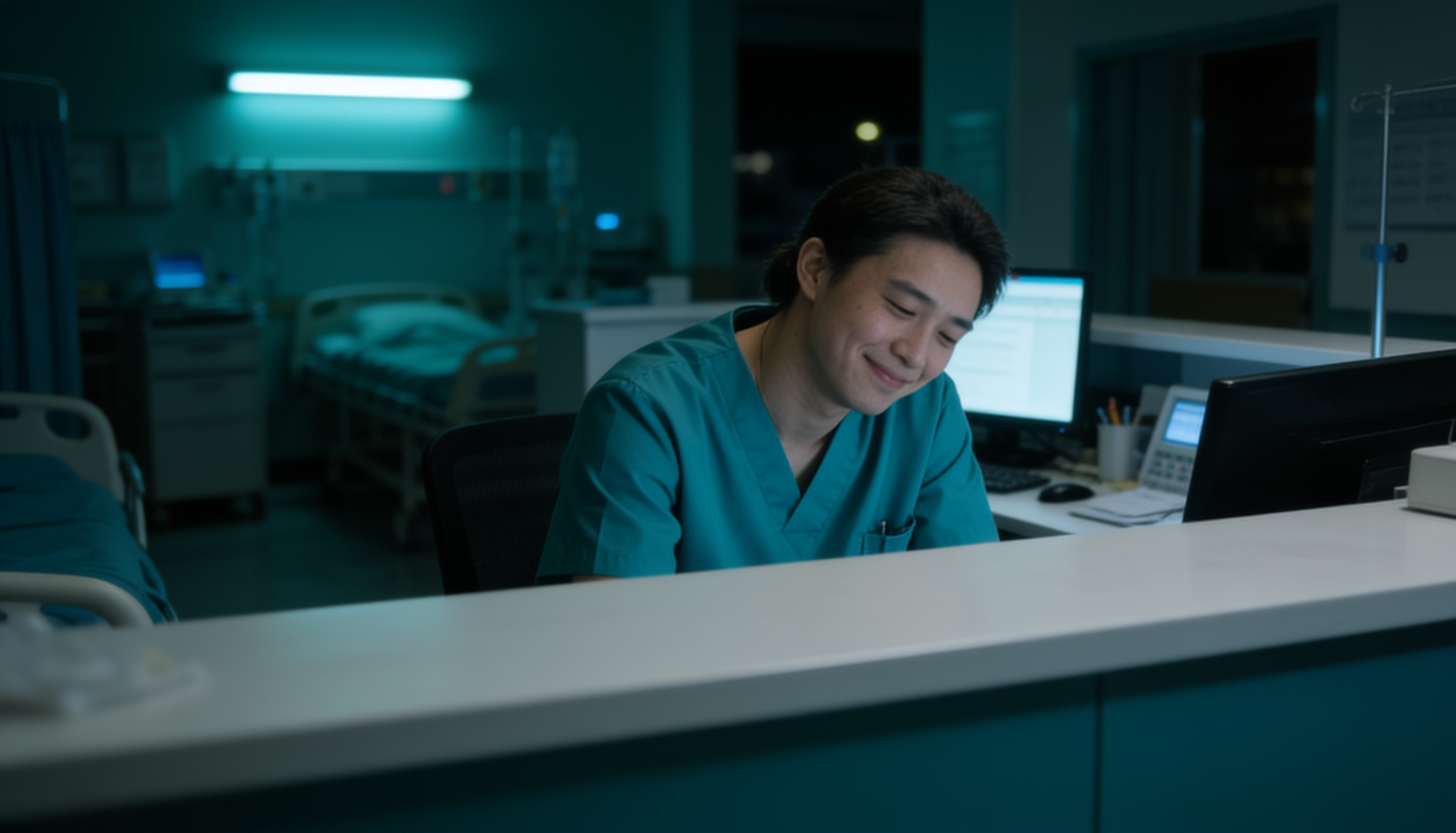

Healthcare worker on night shift
#1
Highest injury incidence rate of any US industry
247K+
Needlestick injuries in US healthcare each year
80%
Of patient handling injuries are preventable
More workplace illness exposure than private industry avg
⚠️
Healthcare workers have the #1 highest workplace injury incidence rate of any industry in the United States — higher than manufacturing, construction, or logistics. Yet most hospitals and health systems have no occupational health coverage after 5pm. HealthcareLive provides 24/7/365 coverage with no on-call fees.
OSHA & CDC Data
Trusted by Healthcare Employers Across the United States
Chewy
BD
Comfort Systems USA
Unilever
Volvo
Coca-Cola
Royal Caribbean
Caterpillar
The Deepest Irony in American Healthcare

The People Who Take Care of Everyone Else Can't Get the Same-Shift Care They Give Their Patients.

When a nurse gets a needlestick from a high-risk patient at 3am, she has two choices in most hospital systems: wait until the occupational health office opens at 8am — five critical hours after the exposure, when baseline bloodwork and post-exposure prophylaxis decision-making should have already happened — or go to her own ER as a patient, pay a copay, sit in a waiting room full of sick people, and create paperwork that embarrasses everyone.

When a CNA tears his rotator cuff repositioning a bariatric patient on a night shift, there's no clinician available at 2am to evaluate the injury, issue modified duty documentation, or prevent the automatic workers' comp claim that starts the moment he calls in unable to work the next day. The injury that should have been a two-week recovery becomes a three-month lost-time claim because no one was there to manage it at the point of injury.

Healthcare employers invest enormous resources in patient safety. Most invest almost nothing in worker safety infrastructure that operates beyond business hours. HealthcareLive exists to close that gap entirely.

♥ The Central Irony
"Healthcare workers are 5x more likely to experience a workplace illness exposure than the average private-sector worker. They know more about the healthcare system than any other workforce. And they're the worst served by it when it's their turn to need care."
💉
247,000+
Needlestick injuries per year
The vast majority occur after hours — on evening and night shifts when occupational health departments are closed and the PEP clock is running.
🪴
$2B+
Annual cost of patient handling injuries
Back strains from lifting, repositioning, and transferring patients are the single largest WC cost category in nursing and long-term care. Most were manageable if triaged within the hour of injury.
⚠️
73%
Of healthcare workers report workplace violence
ER nurses, behavioral health staff, and EMS workers face the highest rates of physical assault in any US profession. Post-incident care and documentation are almost never managed in real time.
🫁
Higher workplace illness rate than private industry
Exposure to infectious agents, chemotherapy drugs, disinfectant chemicals, and airborne pathogens creates an occupational illness burden that requires specialized occupational medicine management — not general urgent care.
💸
$28,400
Average workers' comp claim in healthcare
Healthcare WC claims are among the most expensive in any industry because nursing injuries are often chronic, require specialist management, and extend far longer than the initial injury required. Immediate triage prevents this escalation.
The Six Biggest Injury Risks for Healthcare Workers

Every Shift Type. Every Unit. Every Exposure. Covered.

Healthcare workers face a uniquely complex occupational risk profile — biological exposures, patient handling strains, violence-related injuries, and chemical hazards that require specialized occupational medicine response, not general urgent care.

💉
Most Time-Sensitive
Needlestick & Sharps Injuries
Every needlestick involving a high-risk patient source is a ticking clock. Post-exposure prophylaxis (PEP) for HIV must begin within 2 hours of exposure for maximum effectiveness — and baseline bloodwork on the source patient must be initiated as quickly as possible. Most hospitals have no protocol that reaches an occupational medicine physician after 5pm. HealthcareLive puts a board-certified physician on the line in under five minutes, activates the bloodborne pathogen protocol immediately, and orders PEP if indicated — before the shift ends, regardless of what time it happened.
HealthcareLive Response
Physician on in <5 min → Bloodborne pathogen protocol activated → Source patient evaluation ordered → PEP prescribed if indicated → OSHA 301 completed same shift → Follow-up scheduled
🪴
Highest WC Cost
Patient Handling & Safe Patient Movement
Nurses, CNAs, and patient care technicians sustain more back, shoulder, and musculoskeletal injuries from patient lifting and repositioning than any other occupational group in the US. The average patient handling injury costs $28,400 in workers' comp — a figure that drops dramatically when the injury is triaged by a board-certified orthopedic physician at the time of the event, a modified duty plan is established before the end of shift, and the worker returns to productive activity rather than full lost time.
HealthcareLive Response
Orthopedic triage at point of injury → Modified duty plan before shift ends → Virtual PT ordered if indicated → OSHA work-relatedness determination → RTW tracking
⚠️
Epidemic in ER & Behavioral Health
Workplace Violence & Physical Assault
Emergency room nurses and behavioral health staff face the highest rates of physical assault in any US profession. 73% of healthcare workers report experiencing workplace violence — and the vast majority of incidents go unmanaged clinically because they happen after hours when no occupational health resource is available. HealthcareLive provides immediate post-incident medical evaluation, injury documentation for OSHA 300 recordability determination, and same-shift behavioral health access for workers who need immediate support after a violent event.
HealthcareLive Response
Medical evaluation → Injury documentation → OSHA recordability determination → Behavioral health connection same shift → Follow-up plan
🫁
OSHA Regulatory
Respiratory & Chemical Exposures
Disinfectant chemical exposure, chemotherapy drug spills, and infectious aerosol exposure create occupational illness risks that require specialized occupational medicine evaluation — not a general urgent care visit. Healthcare workers in oncology, sterile processing, and infection control roles face the highest risk. OSHA respiratory exposure incidents require immediate documentation and baseline evaluation that most employers can't execute outside business hours. HealthcareLive provides the occupational medicine expertise to manage these exposures clinically and legally from the moment they occur.
HealthcareLive Response
Occupational medicine evaluation → Exposure protocol activated → Baseline health data captured → OSHA documentation completed → Follow-up monitoring
🚽
High Frequency
Slip, Trip & Fall Injuries
Wet floors from spills, rushed movement through clinical corridors during high-acuity periods, and cluttered environments during overnight shifts make slips and falls one of the most common injury types in hospital and long-term care settings. Most slips and falls in healthcare become OSHA recordables because there's no clinician available to evaluate the injury at the time of the event and determine whether medical treatment is actually required. HealthcareLive's immediate evaluation changes that calculation on every shift.
HealthcareLive Response
Immediate physician evaluation → First aid vs. medical treatment determination → OSHA 301 documentation → Return-to-duty or modified duty plan → Injury trend reporting
🧠
Post-Pandemic Priority
Burnout, Mental Health & Crisis Support
The mental health crisis among healthcare workers accelerated dramatically post-pandemic. 62% of nurses reported burnout in 2024, and healthcare worker suicide rates are among the highest of any professional group. EAP programs with 30-day wait times for a therapist aren't adequate for a workforce in crisis. HealthcareLive provides immediate behavioral health access — same-shift psychiatric assessment, crisis support, and ongoing therapy coordination — as part of the platform's integrated specialty care model, not as a separate bolt-on.
HealthcareLive Response
24/7 psychiatric access → Crisis support same shift → Ongoing therapy coordination → Medication management → Integration with occupational medicine for complex cases
How HealthcareLive Covers Healthcare Employers

24/7 Occupational Health Coverage for Every Unit, Every Shift, Every Exposure.

The current state of after-hours occupational health at most hospitals is: there is none. The night-shift supervisor calls the charge nurse, the charge nurse documents in the EMR, someone reminds the worker to call occupational health in the morning, and the worker either comes in before their next shift exhausted or doesn't come in at all. That's not a clinical protocol. That's a documentation delay.

HealthcareLive replaces that delay with an actual clinical response. One number. One call. A board-certified physician on the line in under five minutes, with the expertise to evaluate the specific exposure, injury, or incident, and the ability to order PEP, issue modified duty documentation, and complete OSHA 301 paperwork before the worker leaves the building.

For healthcare employers, this means every needlestick, every patient handling injury, every exposure incident, and every violent event gets the same quality of immediate occupational medicine response at 3am on a Sunday that it would at 2pm on a Tuesday.

1
Incident Occurs on Any Shift
A needlestick, patient handling injury, exposure event, or violent incident occurs. The supervisor or worker calls HealthcareLive. One number, any device, any time.
→ Immediate connection
2
Board-Certified Physician on the Line
A board-certified occupational medicine or specialist physician joins the call. They evaluate the incident, assess risk, and activate the appropriate clinical protocol — needlestick, exposure, MSK injury, or behavioral health.
→ Under 5 minutes from first call
3
Protocol Activated & Orders Placed
The physician orders what's needed: PEP for needlestick, baseline bloodwork, imaging for musculoskeletal injuries, behavioral health referral for violence incidents. Everything that should happen within the shift, happens within the shift.
→ Same-shift clinical action
4
Documentation Complete Before Shift Ends
OSHA 301, work-relatedness determination, modified duty plan, and exposure record are all completed and in the employer dashboard before the worker leaves the building. No paperwork delay. No Monday morning catch-up.
→ Same-shift documentation
💉 Needlestick Protocol — HealthcareLive
💉
Moment of Exposure (T+0)
Worker calls HealthcareLive
One number. Supervisor or worker initiates the call immediately after the exposure event — not at 8am the next morning.
⏱️
T + <5 Minutes
Occupational medicine physician on the line
Board-certified physician evaluates the incident: source patient risk status, depth and nature of injury, prior vaccination history, and current health status of exposed worker.
🧪
T + 15 Minutes
Bloodborne pathogen protocol activated
Source patient evaluation initiated. Baseline labs ordered for exposed worker. Physician determines PEP indication based on source risk and exposure characteristics.
💊
T + <2 Hours (if indicated)
PEP prescribed and filled
Post-exposure prophylaxis ordered if indicated, prescription sent to 24-hour pharmacy. Two-hour window for maximum HIV PEP effectiveness is met — consistently, on every shift.
📋
Before Shift Ends
OSHA 301 & exposure record complete
Complete OSHA documentation, exposure record, and follow-up testing schedule in the employer dashboard. The worker leaves knowing exactly what happens next — not waiting until Monday for answers.
Clinical Fact
HIV post-exposure prophylaxis is most effective when initiated within 2 hours of exposure and must be started within 72 hours. Waiting until the occ health office opens in the morning is not a protocol — it's a liability.
HealthcareLive for Healthcare Employers

Every Product Your Healthcare Workforce Needs. One Platform.

From needlestick protocol to patient handling injury triage to behavioral health for burned-out staff — HealthcareLive's integrated platform covers every occupational health need unique to the healthcare industry.

🪴
Highest Cost Reduction
Patient Handling Injury Triage
Board-certified orthopedic physician evaluation for patient handling strains — back injuries, shoulder tears, and musculoskeletal trauma from lifting, repositioning, and transferring patients. Same-shift modified duty documentation. Virtual PT coordination. OSHA determination before the next shift.
Remote Injury Care →
🧠
Post-Pandemic Priority
Behavioral Health & Burnout Support
24/7 psychiatric access, crisis support, and ongoing therapy coordination for healthcare workers experiencing burnout, workplace trauma, and occupational mental health crisis. Integrated with occupational medicine for complex cases. No 30-day wait list. Same-shift access on the platform your team already uses.
Behavioral Health Specialty →
🏋️
Prevention
Stretch & Flex for Clinical Staff
Role-specific pre-shift conditioning programs designed to reduce the back strains, shoulder overuse injuries, and repetitive motion disorders that account for the majority of patient handling injury claims. Clinically designed for nursing, CNA, and patient care technician body mechanics. 7–10 minute sessions on any device.
Stretch & Flex Program →
🔬
Regulatory Compliance
Drug Screening & Compliance
Pre-employment, post-incident, and random drug screening programs for healthcare organizations with regulatory requirements. SAMHSA-compliant testing, rapid results, and digital chain of custody. Seamlessly integrated with the same HealthcareLive platform managing your injury triage and exposure protocols.
Drug Screening →
📊
Employer Intelligence
OSHA Documentation & Analytics
Real-time OSHA 300/301 documentation, injury frequency trend reports, unit-level risk analysis, and exposure incident tracking — all generated automatically from physician-completed triage records. Gives HR Directors and CNOs the data to address injury patterns before they become regulatory findings.
Employer Dashboard →
Case Study
How a Regional Hospital System Reduced Workers' Comp Costs by 41% and Eliminated After-Hours Needlestick Response Gaps
A 1,800-bed regional health system operating four hospital campuses and 12 ambulatory locations was averaging 38 needlestick incidents per year with a consistent problem: 71% of exposures were occurring between 7pm and 7am, when their occupational health department was closed. Workers were being told to "come in first thing tomorrow," PEP decisions were delayed by an average of 6.5 hours, and source patient baseline evaluation was routinely incomplete before the 72-hour PEP window.
HealthcareLive replaced their after-hours occupational health gap with 24/7 coverage across all four campuses. Every needlestick, every patient handling injury, every exposure incident became a real-time clinical event regardless of shift. In 18 months:
41%
Reduction in total workers' comp costs, 18 months
0
Needlestick cases with PEP delay >2 hours after HL deployment
−58%
Lost-time days from patient handling injuries
94%
Nursing staff satisfaction with occupational health access
Before HealthcareLive, I dreaded 7pm on Fridays. That's when our occ health team went home and I knew the next needlestick was going to turn into a 6am phone call to me from a nurse who'd been sitting on an exposure for 11 hours. Now I get a notification that the incident was managed within 20 minutes of the call — PEP ordered, OSHA documentation complete, follow-up schedule set. I haven't had a 6am call since we deployed HL.
KR
Karen R., MSN, RN
VP Patient Care Services & CNO, Regional Health System
🩺 Healthcare — 1,800 Beds, 4 Campuses
Every Type of Healthcare Employer

We Serve Every Setting Where Healthcare Workers Work — and Get Hurt.

The injury profile changes by setting. The coverage gap is the same everywhere: no occupational health after 5pm.

🏥
Hospitals & Health Systems
Multi-campus acute care systems with large overnight nursing staffs, ER departments with high violence exposure, and surgical teams with needlestick risk across every shift. HealthcareLive provides centralized 24/7 occ health coverage across every campus through a single platform.
NeedlestickPatient handlingER violenceExposure
🧓
Nursing Homes & Long-Term Care
CNA workforces performing the highest volume of manual patient handling in the healthcare industry — lifting, repositioning, and transferring residents with limited mechanical lift availability. The highest rate of back injuries and musculoskeletal claims in all of healthcare comes from long-term care settings.
Patient handlingBack strainsResident violenceSlip & fall
🧠
Behavioral Health Facilities
Psychiatric facilities and behavioral health units face the highest rates of patient-on-staff physical assault in the healthcare system. Staff injuries from restraint events, patient aggression, and violent incidents require immediate medical evaluation and post-incident behavioral health support for the staff member.
Physical assaultRestraint injuriesPost-incident traumaStaff burnout
🧪
Oncology & Specialty Clinics
Chemotherapy drug exposure, hazardous material handling, and needle-intensive procedures create occupational illness risks that require specialized occupational medicine expertise. Hazardous drug exposure protocols require immediate evaluation and baseline documentation that general urgent care cannot provide.
Chemo exposureNeedlestickChemical exposureRadiation
🚑
Home Health & Hospice
Home health workers operate in unpredictable environments without on-site supervisors — making them uniquely vulnerable to both patient handling injuries and exposure incidents with no immediate clinical resource. HealthcareLive's platform reaches home health workers wherever they are, on any shift, through any device.
Isolated workplacePatient handlingNeedlestickViolence
📈
Medical Offices & Ambulatory Care
Smaller medical practices and ambulatory surgery centers often have no formal occupational health program at all — relying on the general urgent care system for worker injuries. HealthcareLive gives practices of any size enterprise-grade occupational health infrastructure without the overhead of a dedicated internal program.
NeedlestickErgonomic injurySlip & fallExposure
Talk to Our Healthcare Team

Your Staff Takes Care of Everyone Else. Let Us Help You Take Care of Them.

HealthcareLive's healthcare team works exclusively with hospitals, health systems, nursing homes, and clinical employers to build occupational health coverage programs that actually function on overnight shifts — when most of your injuries happen and none of your internal resources are available.

We'll walk you through a needlestick protocol demonstration, a patient handling injury cost analysis for your workforce, and a deployment timeline that gets 24/7 occ health coverage live across every campus in under 30 days.

Needlestick protocol demo tailored to your facility type
Patient handling injury cost analysis for your staffing model
After-hours coverage gap assessment across your campuses
OSHA documentation workflow demonstration
Go-live in <30 days for most healthcare employers
Get a Healthcare Demo
Tell us about your organization and we'll build the demo around your specific occupational health coverage gaps.

We respond to every request within one business day. Your information is never shared with third parties.
For Every Healthcare Employer

Your Staff Doesn't Clock Out at 5pm. Your Occupational Health Coverage Shouldn't Either.

HealthcareLive gives healthcare employers 24/7 needlestick protocol, patient handling injury triage, behavioral health access, and OSHA documentation — on every shift, across every campus, for every worker who shows up to take care of your patients. It's the coverage your clinical staff deserves, delivered on the platform they'll actually use.

Trusted by Hospitals, Health Systems, Nursing Homes & Behavioral Health Facilities Across All 50 States · HIPAA Compliant · SOC 2 Type II
Scroll to Top