Forklifts are among the most dangerous machines in any plant, and the violations OSHA cites most are all about training. Here is what the standard requires, the citations to avoid, and what a forklift injury really costs.
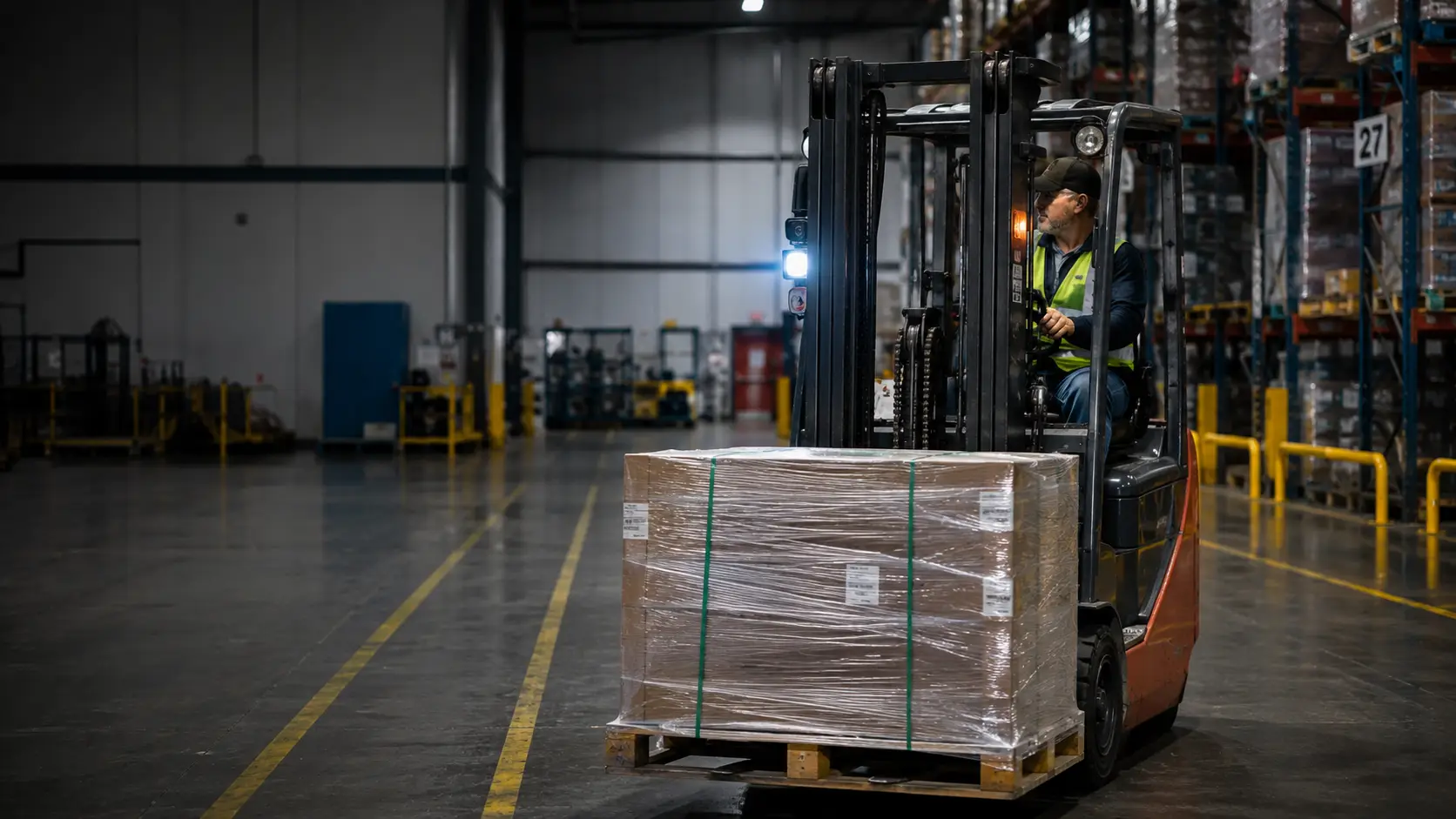
Forklift safety is one of the highest-stakes issues on any plant floor, because a forklift is essentially a multi-ton machine in constant motion through spaces full of people, pallets, and racking. It looks routine, which is exactly why it gets treated casually, and that gap between how dangerous forklifts are and how routine they feel is where workers get hurt.
The numbers are sobering. In 2024, 84 workers died in incidents involving forklifts and similar powered trucks, and tens of thousands more were injured. OSHA regulates this equipment under the Powered Industrial Trucks standard, and it is consistently one of the most-cited rules in the country, with the violations clustering around a single theme: training. Here is what the standard requires, the citations OSHA issues most often, and what a forklift injury actually costs.
Why forklift safety is so high-stakes
Forklift safety must account for several severe hazards concentrated in a single machine. The leading cause of death is the tip-over: when a forklift overturns, the operator who tries to jump clear or is not wearing a seatbelt is often crushed, and crushing in a tip-over accounts for a large share of forklift fatalities.
The second major hazard is to people on foot. Roughly 36% of forklift fatalities involve pedestrians, struck or pinned by a truck whose operator did not see them. Add falls from forklifts, loads falling from the forks, and workers caught between a truck and a fixed object, and the injury picture is uniformly severe, which is what makes forklift safety so critical.
The severity shows in the data. OSHA’s severe-injury reports documented 1,190 serious forklift injuries over a recent two-year span, including 994 hospitalizations and 196 amputations. And forklift incidents keep workers out longer than average, around 16 lost workdays per incident, roughly double the norm for other injuries. These are not minor mishaps; they are among the most catastrophic events a plant can have.
What the forklift safety training standard requires
The OSHA Powered Industrial Trucks standard, 29 CFR 1910.178, makes operator competence the center of forklift safety, and its training requirements are specific.
No one may operate a forklift in the workplace until they have been trained, evaluated, and certified. The training itself has three required parts: formal instruction, such as lectures, videos, or written materials; practical training through demonstrations and hands-on exercises; and an evaluation of the operator’s performance in the actual workplace. Operators must be at least 18.
Crucially, training has to be both truck-type-specific and workplace-specific. A worker certified on a sit-down counterbalanced forklift is not automatically qualified on a narrow-aisle reach truck, and training done at one facility does not transfer to a different layout, surface, or traffic pattern. Employers must also document certification, recording each operator’s name, the dates of training and evaluation, and who conducted them.
Training is not a one-time event. The standard requires refresher training and a fresh evaluation whenever an operator is involved in an accident or near-miss, is observed operating unsafely, is assigned a different type of truck, or when workplace conditions change. On top of that, every operator must be re-evaluated at least once every three years. Skipping these triggers is one of the most common ways employers fall out of compliance.
The forklift safety citations OSHA writes most of
Powered Industrial Trucks ranked as the sixth most-cited OSHA standard in fiscal year 2024, with 2,248 citations and roughly $8 million in penalties, and manufacturing led every sector with 937 citations and about $2.7 million in penalties. The forklift safety record bears this out, and you can see the recurring problems in which provisions get cited most:
- Safe operation, 1910.178(l)(1): the single most-cited provision, with 531 citations, covering operator practices like speed, load handling, and pedestrian awareness.
- Refresher training and evaluation, 1910.178(l)(4): 305 citations, for failing to retrain after accidents, near-misses, or observed unsafe operation.
- Certification, 1910.178(l)(6): 286 citations, for not documenting that training and evaluation occurred.
- Daily inspections, 1910.178(q)(7): 172 citations, for not inspecting trucks before use.
- Removing unsafe trucks, 1910.178(p)(1): 153 citations, for leaving defective forklifts in service.
The pattern is unmistakable: the top citations concern training, evaluation, and basic operational discipline. That is also encouraging, because research suggests that around 70% of forklift incidents could be prevented with consistent operator training. The same gaps that draw citations are the ones causing the injuries, which means closing them protects workers and your compliance record at once. You can see where this equipment falls on OSHA’s most-cited standards list.
What does a forklift injury cost
The human cost of a forklift safety failure comes first: deaths, amputations, and crush injuries that end careers. But the financial cost is also large and many-layered.
Forklift injuries are severe, which is why forklift safety carries such a direct cost: the workers’ comp claims are expensive, and at roughly double the average lost time, they drive up your claim severity, your DART rate, and ultimately your experience modification rate and premium. A single amputation averages well into six figures over its life, and a fatality is incalculable.
Then come the penalties. Forklift violations cost employers about $8 million in OSHA penalties in 2024, with manufacturers absorbing the largest share. Add property and product damage from the incident itself, the productivity loss, and the investigation, and a single serious forklift event can dwarf the cost of the training program that would have prevented it. The economics of prevention are not closed.
Building a forklift safety program that works
A strong forklift safety program goes beyond checking the training box. The forklift safety elements that actually prevent incidents:
- Rigorous initial training and evaluation, specific to each truck type and each workplace, with documented certification for every operator.
- Refresher discipline. Do not wait for the three-year mark. Retrain and re-evaluate immediately after any accident, near-miss, or observed unsafe operation, which is exactly where the citations and the injuries concentrate.
- Daily pre-use inspections, with a hard rule that any forklift found defective is removed from service until repaired.
- Pedestrian separation. Because pedestrians account for so many fatalities, mark lanes and crossings, use physical barriers and protected walkways, require high-visibility clothing, and plan traffic to keep people and trucks apart.
- Operating discipline. Enforce speed limits, load limits, seatbelt use, sounding the horn at intersections and blind corners, and safe load handling.
- Engineering and administrative controls. One-way aisles, mirrors and sensors at blind intersections, adequate lighting, and the segregation of high-traffic pedestrian areas all reduce the risk of collisions.
The thread through it all is that forklift safety is a daily operating habit, not an annual training session, and the plants with the best forklift safety records treat it that way.
Where HealthcareLive fits
Training your operators and running your traffic plan are within your facility’s control. Where HealthcareLive adds value is in the medical response and the compliance aftermath after a forklift incident, and because these injuries are severe, that response matters enormously.
HealthcareLive’s same-shift clinical care through Remote Injury Care and On-Site Programs puts expert help in front of an injured worker in the critical first minutes after a struck-by or crush injury. Its occupational health support handles the recordkeeping and the time-sensitive OSHA reporting that serious forklift injuries trigger, including the requirement to report an amputation or inpatient hospitalization within 24 hours and a fatality within 8 hours, all of which tie into your broader recordkeeping obligations. And it supports return-to-work and modified duty for recovering workers. For the catastrophic end of the injury spectrum, such as the amputations forklifts can cause, a fast, organized medical and compliance response is exactly what limits the human and financial damage. Forklift injuries sit alongside other common plant-floor injuries that a complete program must address.
The bottom line
Forklift safety comes down to a hard truth: the most dangerous machine in many plants is also the one workers treat most casually, and the OSHA citations prove that the gaps are almost always in training, evaluation, and basic operating discipline. With 84 deaths in 2024, tens of thousands of injuries, and millions in penalties concentrated in manufacturing, the case for a serious forklift safety program is overwhelming.
Train operators rigorously and specifically; refresh and re-evaluate without waiting for the three-year clock; inspect trucks daily; separate people from forklifts; and enforce safe operation every shift. Then have a fast medical and compliance response ready for the incidents that still happen. If you want help with that response, the reporting, and the recovery, HealthcareLive can help.
Frequently asked questions
How dangerous are forklifts? Very. In 2024, 84 workers died in incidents involving forklifts and similar powered trucks, and tens of thousands are injured each year. Tip-overs are the leading cause of fatalities, often by crushing the operator, and roughly 36% of forklift fatalities involve pedestrians. OSHA severe-injury reports documented nearly 1,200 serious forklift injuries over a recent two-year period, including amputations and hundreds of hospitalizations.
What does OSHA require for forklift training? Under 29 CFR 1910.178, operators must be trained, evaluated, and certified before operating a forklift. Training must include formal instruction, practical hands-on training, and an evaluation of performance in the actual workplace, and forklift safety training must be specific to both the truck type and the workplace. Operators must be at least 18, and the employer must document each operator’s certification.
How often is forklift refresher training required? Refresher training and a new evaluation are required whenever an operator has an accident or near-miss, is observed operating unsafely, is assigned a different type of truck, or when workplace conditions change. In addition, every operator must be re-evaluated at least once every three years. Waiting for the three-year mark while ignoring the other triggers is a common compliance failure.
What is the most common forklift OSHA violation? The most-cited provision is safe operation under 1910.178(l)(1), with 531 citations in 2024, covering operator practices like speed, load handling, and pedestrian awareness. It is followed by failures in refresher training, evaluation, and operator certification, meaning the top forklift safety citations are overwhelmingly about training and operating discipline.
What is the leading cause of forklift fatalities? Tip-overs. When a forklift overturns, the operator is often crushed, especially if not wearing a seatbelt or trying to jump clear. Struck-by incidents involving pedestrians are the other major fatality cause, accounting for roughly a third of forklift deaths.
How much does a forklift injury cost? Forklift injuries are severe and expensive. They keep workers out about 16 days on average, roughly double the norm, which raises claim severity and your experience modification rate. Serious cases like amputations average well into six figures over their life. Industry-wide, OSHA forklift penalties totaled about $8 million in 2024, with manufacturers absorbing the largest share, before accounting for property damage and lost productivity.
Sources and methodology
This guide reflects current data on powered industrial truck safety, including OSHA’s Powered Industrial Trucks standard, 29 CFR 1910.178; its ranking as the sixth most-cited OSHA standard in fiscal year 2024 with 2,248 citations and roughly $8 million in penalties, with manufacturing leading at 937 citations; the most-cited sub-provisions, led by safe operation (l)(1) at 531 citations, refresher training (l)(4) at 305, and certification (l)(6) at 286; National Safety Council Injury Facts data showing 84 forklift-related worker deaths in 2024 and an average of about 16 lost workdays per incident; OSHA severe-injury report data showing 1,190 serious forklift injuries over a recent two-year period, including 994 hospitalizations and 196 amputations; and OSHA estimates that pedestrians are involved in roughly 36% of forklift fatalities and that tip-overs are the leading fatal event.
Injury totals vary by source and year, and BLS now reports nonfatal days-away data biennially, so some figures span two-year periods. OSHA penalty figures reflect 2024 enforcement data. Service descriptions attributed to HealthcareLive, including Remote Injury Care, On-Site Programs, and occupational health support, reflect HealthcareLive’s own program design and network experience. This content is informational and is not legal or medical advice.